Émulsion VAE (Acétate de Vinyle Éthylène) is a chemical raw materials manufactured by Desay. Key specs: CAS No. 7085-85-0, Type Vinyl acetate & ethylene copolymer, Appearance Milky white liquid.
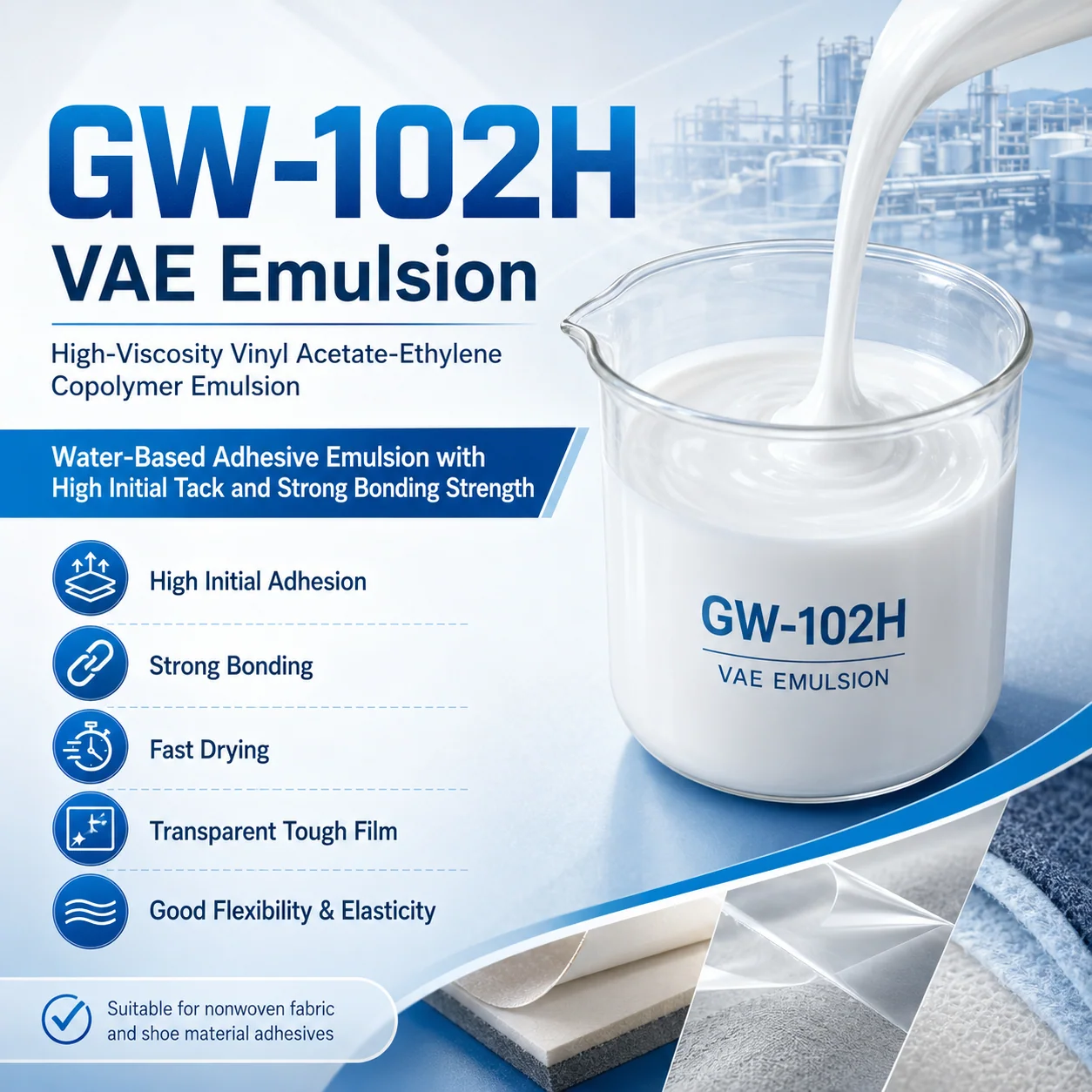
Émulsion VAE (Acétate de Vinyle Éthylène)
Émulsion copolymère VAE de qualité industrielle pour assemblage bois, reliure et collage mousse.
Spécifications Techniques
| CAS No. | 7085-85-0 |
| Type | Vinyl acetate & ethylene copolymer |
| Appearance | Milky white liquid |
| Shelf Life | 12 months |
| Packaging | 50kg/barrel |
Nos spécialistes répondent sous 24 h.
Caractéristiques Clés
- Versatile bonding for wood, foam, fabric and paper
- Water-resistant after full cure
- Available in 50kg industrial barrels
Applications
- Wood splicing
- Finger jointing
- Bookbinding
- Foam bonding
- Fabric lamination
Frequently Asked Questions
What is the Émulsion VAE (Acétate de Vinyle Éthylène) used for?
The Émulsion VAE (Acétate de Vinyle Éthylène) by Desay is designed for wood splicing, finger jointing, bookbinding. Émulsion copolymère VAE de qualité industrielle pour assemblage bois, reliure et collage mousse.
What are the specifications of the Émulsion VAE (Acétate de Vinyle Éthylène)?
CAS No.: 7085-85-0. Type: Vinyl acetate & ethylene copolymer. Appearance: Milky white liquid. Shelf Life: 12 months. Packaging: 50kg/barrel.
Does the Émulsion VAE (Acétate de Vinyle Éthylène) come with certifications?
Please contact us for certification details.
How can I get a quote for the Émulsion VAE (Acétate de Vinyle Éthylène)?
Use the inquiry form on this page, or contact us at jack@desaiglue.com. We respond within 24 hours.
What is the difference between VAE emulsion and standard PVA glue?
VAE emulsion contains 15-40 percent ethylene co-monomer in the polymer chain, which lowers the glass transition temperature and provides built-in flexibility. Standard PVA is a rigid homopolymer that becomes brittle when cold and re-dissolves in water. VAE achieves D3 water resistance under EN 204 without external plasticizers, while PVA only reaches D1-D2. For a detailed comparison, see our VAE emulsion technical guide.
How do I verify VAE emulsion quality when receiving a shipment?
Check three parameters on the Certificate of Analysis: solid content (should be within plus or minus 1 percent of specification), viscosity (within plus or minus 15 percent), and pH (within plus or minus 0.3 units). If any value falls outside these tolerances, the batch may perform differently on your production line. For a complete quality verification framework, see our adhesive testing methods guide.
Get a Quote for Émulsion VAE (Acétate de Vinyle Éthylène)
We'll respond within 24 hours with pricing and technical details.